May 23, 2026 • Renata Solís • 10 min reading time • Specs verified June 5, 2026
Weighted Vest Sizing for Women: What the Spec Sheets Don't Tell You
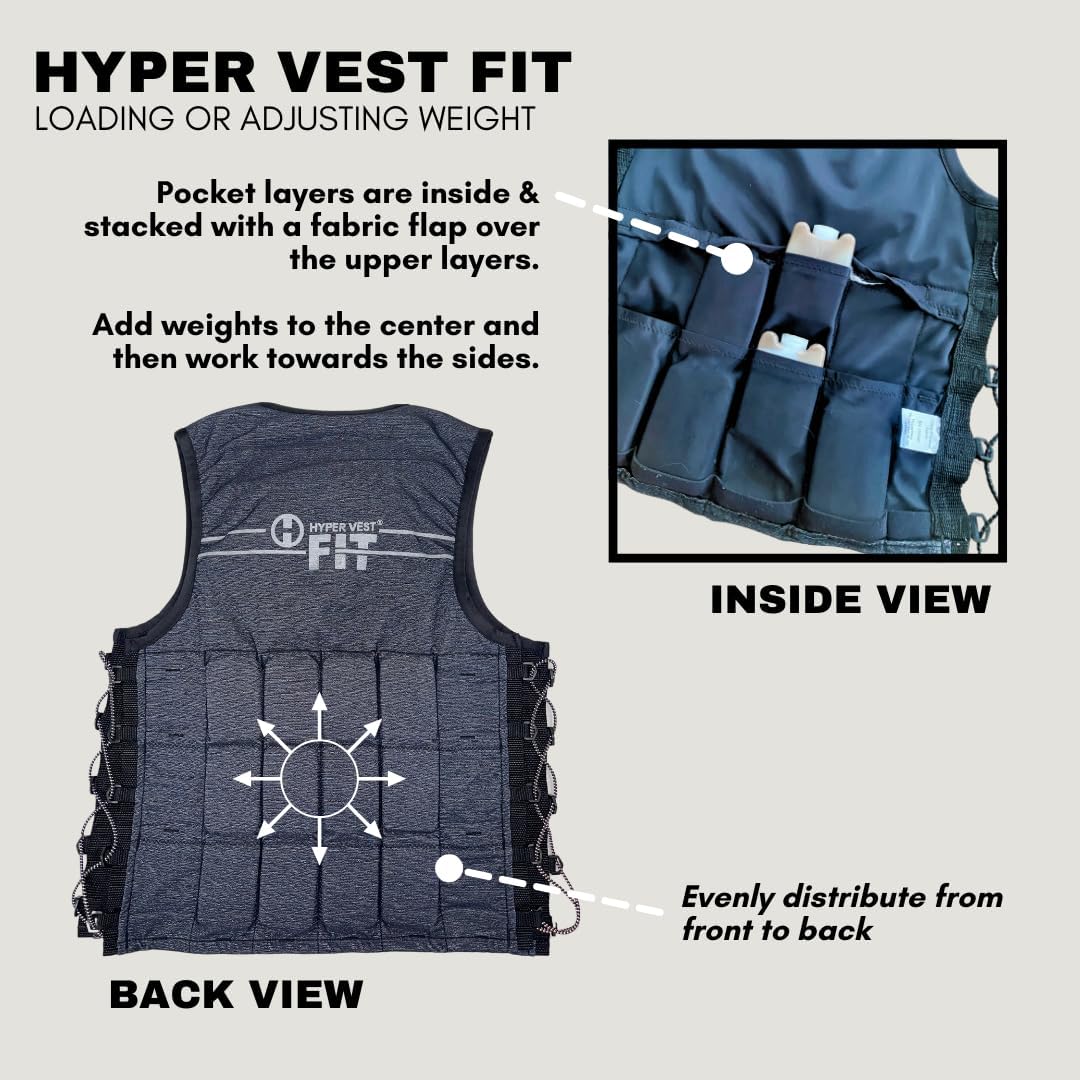
A weighted vest is exactly what it sounds like: a snug-fitting garment, usually a hybrid of vest and harness, loaded with removable steel or sand weights to add resistance to any workout — walking, running, step aerobics, plyometrics, or instructor-led group classes. Adding load this way is called progressive overload — the principle that your body gets stronger when you gradually increase the demand you place on it. A weighted vest spreads that extra demand across your whole body at once, which is why they’ve become a staple for everyone from casual walkers to Zumba instructors leading three classes a day. If you’ve started shopping for one, you’ve probably noticed that most vests list a single weight range and a single size chart. What those spec sheets almost never flag is that the underlying fit template is built around male torso geometry. This guide unpacks what that actually means for women buyers at every price tier — and how to choose a vest that stays put, doesn’t chafe, and lets you move the way you train.
| EDITOR'S PICK[Hyperwear Hyper Vest FIT Weight](https://www.amazon.com/dp/B0D1FWZKCK?tag=greenflower20-20)… | Mid-tier[EMPOWER Weighted Vest for Women](https://www.amazon.com/dp/B07P5VSKPP?tag=greenflower20-20)… | Budget pick[TB3C Adjustable Weighted Vest W](https://www.amazon.com/dp/B0DYJ2ZSW9?tag=greenflower20-20)… | |
|---|---|---|---|
| Weight range | 5 or 10 lb | 4-10 or 10-16 lb | 4-10/11-20/20-30 lb |
| Weight material | Steel | — | — |
| Machine washable | ✓ | — | — |
| Reflective strips | — | ✓ | — |
| Plus size option | — | — | ✓ |
| Price | $114.99 | $69.95 | $21.99 |
| See on Amazon → | See on Amazon → | See on Amazon → |
Why “One Size” Weighted Vests Fit Men by Default
Here’s the core problem: a vest manufacturer sets a fit template. That template has a chest circumference range, a torso length (the distance from shoulder seam to hem), and a distance between the shoulder straps that determines how the vest sits across your collar area. The commercial default for most of those templates is a male torso: narrower hips relative to chest, longer torso, flatter chest profile, and wider shoulder spread.
Reviewers at Garage Gym Reviews have documented this pattern repeatedly across their weighted vest coverage, noting that female testers consistently flag three specific contact points as problems on standard unisex vests: the front panel riding up into the bust, the shoulder straps sitting too wide and migrating toward the upper arm, and the lower hem flaring away from the hips because the vest tapers where a woman’s torso widens. None of these issues show up in a spec sheet. A vest listed as “fits chest 32–42 inches” may technically close around a 36-inch chest and still fit badly.
What you’re looking for instead of raw chest circumference:
- Front panel depth — does the manufacturer specify a shorter front panel for bust clearance, or is it the same front-to-back?
- Shoulder strap width — how far apart are the two shoulder contact points? Narrower is generally better for women.
- Hip taper vs. hip curve — does the lower hem follow a straight cut (male default) or an inward curve at the waist and flare at the hip?
- Side-panel closure position — side-cinch vests let you independently tighten the lateral panels, which is the closest approximation to a women’s fit adjustment most unisex vests offer.
Verywell Fit’s guide on choosing a weighted vest explicitly recommends that women prioritize adjustable side-closure systems over fixed-width vests for exactly this reason — the lateral buckle or zipper lets you close gaps without compromising shoulder position.
The Vest-by-Vest Fit Reality: HyperVest Elite, SoftVest Pro, 5.11 TacTec, and Henkelion
Let’s go through the four vests that dominate the premium-to-professional tier and translate what the published specs actually mean for a female buyer.
Hyperwear HyperVest Elite
The HyperVest Elite is the vest most frequently cited in instructor-grade settings, and Hyperwear is one of the few manufacturers that publishes a dedicated women’s sizing line rather than relying on a unisex template. The women’s version features a shorter front panel, angled shoulder straps set closer together, and a contoured hem. The Hyperwear HyperVest Elite product specification sheet confirms that the women’s models carry a distinct SKU with modified torso geometry — not simply a smaller version of the men’s pattern.
The practical implication: if you’re shopping the HyperVest Elite, specify the women’s SKU explicitly. Retailers sometimes list both under a shared product page; add-to-cart defaults can land you in the wrong cut. Owners consistently report the women’s Elite stays in contact across the sternum during high-range-of-motion moves — lateral jumps, Zumba choreo changes, stair climbs — where unisex vests gap and shift.
Weight increment precision is also a meaningful differentiator here. The Elite uses small steel weight strips, and the women’s version accommodates the same micro-loading protocol — you can add weight in approximately half-pound increments (micro-loading means adding weight in very small steps, usually under one pound, rather than jumping between fixed weight options). For instructors managing gradual progressive overload across a training cycle, that granularity matters more than total max weight.
Hyperwear SoftVest Pro
The SoftVest Pro uses a softer, more pliable chassis — think closer to a structured compression garment than a traditional tactical-style vest. Barbend’s weighted vest buyer’s guide identifies the SoftVest Pro as one of the better-performing options for high-movement aerobic work precisely because the soft shell doesn’t create rigid pressure points the way a stiffer vest body does.
For women, the SoftVest Pro’s compliance — the material’s ability to flex and conform — partially compensates for a less gender-specific pattern. It won’t flare at the hip the way a rigid vest will, and it doesn’t create the hard-edge chafe at the bust line that stiffer alternatives generate. That said, the shoulder straps on standard SoftVest Pro units still sit at a width calibrated for broader shoulders. Women with narrower shoulder widths (roughly under 14 inches between acromion points, the bony tips of the shoulders) report that the straps slide laterally during movement. The fix owners cite most often: the optional chest strap accessory cinches the two shoulder panels forward and inward, which effectively narrows the contact spread.
5.11 TacTec
The TacTec is a tactical-heritage plate carrier that has crossed into the fitness market on the strength of its build quality and MOLLE webbing system. (MOLLE — pronounced “molly” — stands for Modular Lightweight Load-carrying Equipment; it’s a grid of fabric loops that let you attach accessory pouches or weight plates in different configurations.) The TacTec is durable, well-reviewed for longevity under daily use, and genuinely adjustable via cummerbund (the elastic side panel that wraps the torso).
For women, it has two honest tradeoffs. First, the front plate pocket is designed for a flat steel plate — it creates a rigid flat surface across the chest that doesn’t accommodate bust projection well. Owners across aggregated reviews consistently describe a gap between the lower edge of the front plate and the body, which lets the vest bounce during running or aerobic movement. Second, the shoulder straps are wide and rigid — designed for load-bearing in a tactical context, not ergonomic fit for a narrower shoulder girdle. Women who use the TacTec in fitness settings typically report sizing down one level and using the cummerbund at its tightest position, accepting that the vest won’t sit as flush as a purpose-built fitness vest.
The TacTec earns its place for studio operators who need durability above all else and run a co-ed equipment inventory. Its longevity under multi-user daily use is well-documented — Garage Gym Reviews notes it as one of the most mechanically durable options at the premium tier. But it is not an ergonomic-first choice for women.
Henkelion
Henkelion occupies the $120–$200 adjustable vest tier and is one of the few brands that explicitly markets a women’s-specific pattern at accessible price points. The women’s Henkelion vest features a contoured waist and a shorter front rise compared to the unisex version. Across owner reviews, women report it as one of the more comfortable out-of-box fits without requiring aftermarket adjustment, particularly for bodyweight-training and walking protocols where the vest isn’t under high lateral stress.
The tradeoff at this tier: weight increment options are less granular than the HyperVest Elite system. Henkelion vests typically load in 2.5-pound increments, which is adequate for progressive load building but limits the micro-loading precision instructors often want when designing structured training progressions. For a home-gym athlete or casual group-fitness participant, that’s a non-issue. For a certified instructor designing periodized programming, it’s worth knowing going in.
By the Numbers: Fit Variables That Actually Move the Decision
| Variable | What to Ask the Retailer / Check the Spec Sheet |
|---|---|
| Front panel length | Is there a women’s-specific SKU with a shorter front rise? |
| Shoulder strap spread | Distance between straps at the collar — under ~13–14 cm suits narrower shoulders |
| Closure system | Side-cinch or cummerbund? Independent lateral adjustment is the key feature |
| Weight increment | Half-pound steps (Elite) vs. 2.5 lb steps (Henkelion) vs. fixed-plate only (TacTec) |
| Bust accommodation | Soft chassis or contoured front panel vs. rigid flat plate |
Sizing Protocol: How to Get It Right Before You Buy
ACE Fitness, in their guidance for group fitness instructors on adding load to cardio programming, emphasizes that a vest should feel like a second skin during movement — no bounce, no lateral migration, no pressure points that distract from coaching cues. Getting there before your return window closes means measuring before you order.
What to measure:
- Chest circumference — measure at the fullest point, not the underbust. This is not the same measurement used for bra sizing; it includes bust projection.
- Torso length — from the top of your shoulder (the bony point, not the neck) straight down to your natural waist. Compare this to the vest’s front panel measurement if published.
- Shoulder width — across the back, from the outer edge of one shoulder to the other. This rarely appears on spec sheets but is worth asking a retailer about.
- Weight target — what percentage of bodyweight you’re targeting. Verywell Fit’s guidance on weighted vest selection follows the widely-cited starting point of 5–10% of bodyweight for new users; instructors already adapted to load training often work in the 10–15% range for sustained aerobic sessions.
If you’re buying through a retailer that accepts returns, the decision-relevant test on arrival is the same regardless of price tier: put the vest on, cinch it to your working tightness, and then laterally raise both arms to shoulder height simultaneously. The front panel should stay in contact across the sternum. Then rotate your torso 45 degrees each direction. The shoulder straps should not migrate toward your upper arm. If either of those things happens, fit is the problem — and no amount of breaking it in will solve geometry.
The Decision Rule
If you’re a certified instructor or studio operator buying a vest that will anchor daily multi-session use and you need both ergonomic fit and micro-load precision: the HyperVest Elite women’s SKU is the documented answer — specify it by SKU, confirm it with the retailer before ordering, and expect to pay for that granularity.
If you’re a home-gym athlete or group-fitness participant who wants a comfortable women’s-fit vest under $200 without custom-ordering: the women’s Henkelion is the honest starting point — contoured fit, accessible price, adequate for progressive overload at 2.5-lb steps.
If you’re a co-ed studio operator sourcing a shared inventory where durability outranks individual ergonomics: the TacTec holds up under daily multi-user load better than most alternatives — but brief female clients on the fit tradeoffs upfront so they know what to expect.
The spec sheet will tell you the weight range. It won’t tell you where the vest will sit on your body when you’re 45 minutes into a class. That’s the gap this guide is meant to close.