April 16, 2026 • Renata Solís • 9 min reading time • Specs verified June 5, 2026
HyperVest Elite vs. HyperVest FIT vs. ZELUS Adjustable: Premium Weighted Vest Cross-Shop
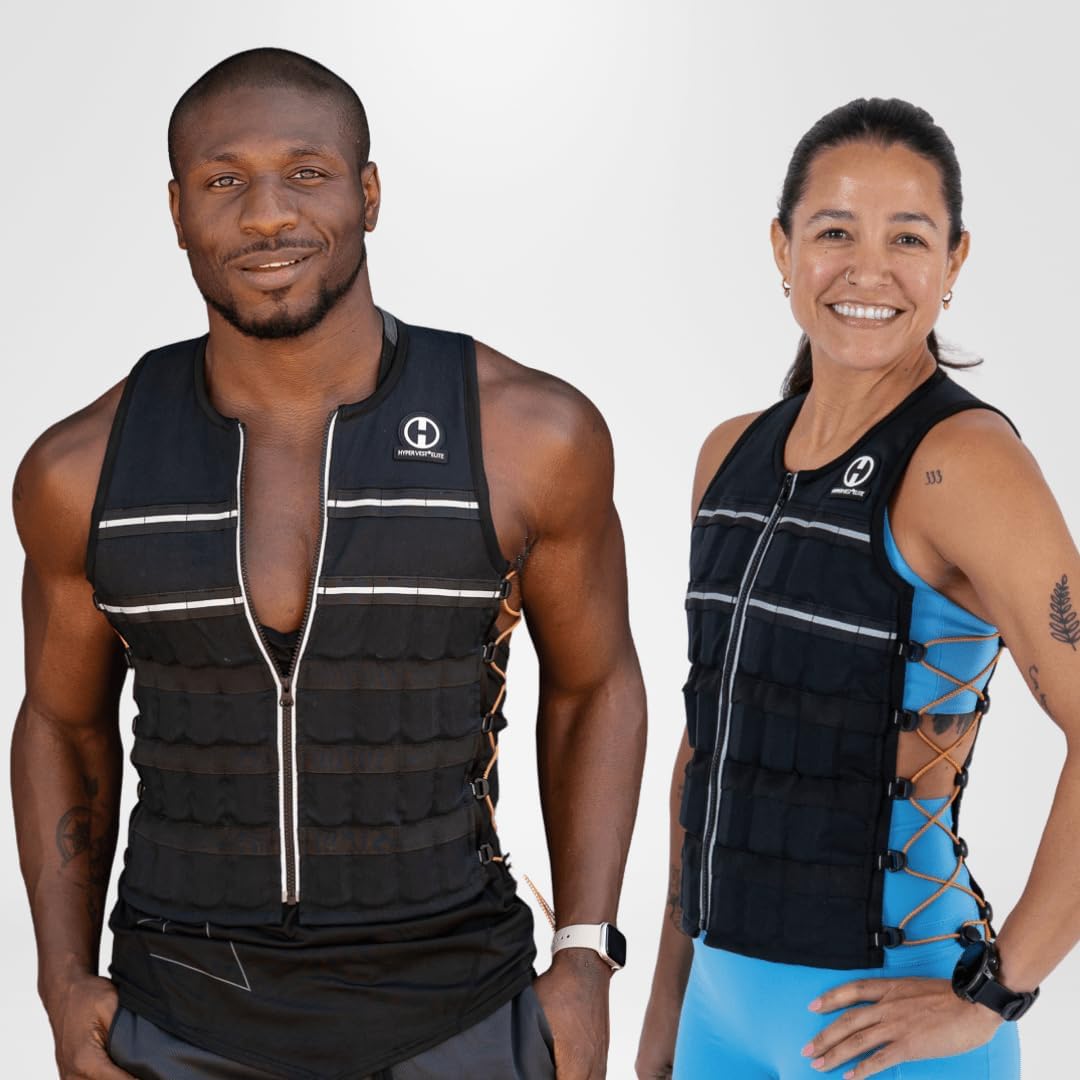
A weighted vest is exactly what it sounds like: a snug-fitting garment — usually nylon or a stretch fabric — that you wear during exercise to add extra load to your body without holding anything in your hands. Instead of picking up a dumbbell, the weight is distributed across your torso, which lets you run, do jumping jacks, or work through a circuit class with your arms completely free. The appeal is obvious, but not all vests are built the same. Some use rigid steel plates, others use small flexible steel shot poured into sewn channels, and the difference in how those weights feel on your body — during a Zumba set, a hill walk, or a high-rep circuit — is enormous. This article compares three vests that come up consistently in the practitioner community: the Hyperwear HyperVest Elite, the Hyperwear HyperVest FIT, and the ZELUS Adjustable Weighted Vest. By the end, you’ll have a clear decision rule for which vest deserves your money.
| EDITOR'S PICKHyperwear HyperVest ELITE Adjus… | Mid-tierHyperwear Hyper Vest FIT Weight… | Budget pickZELUS Weighted Vest | |
|---|---|---|---|
| Weight Range | 10 lb | 5–10 lb | 5–15 lb |
| Material | CORDURA | — | Z-Fit Soft Iron |
| Steel Type | Thin steel | USA steel | Soft iron |
| Washable | — | ✓ | ✓ |
| Reflective Strips | — | — | ✓ |
| Price | $259.95 | $114.99 | $33.98 |
| See on Amazon → | See on Amazon → | See on Amazon → |
What You’re Actually Comparing (And Why It Gets Complicated)
Once you’ve decided a weighted vest is the right tool — rather than, say, adding plate weight to a barbell — the comparison narrows to three variables that experienced practitioners consistently rank as decisive:
- Weight distribution and stability. Does the vest shift, bounce, or ride up during dynamic movement? This is the number-one complaint in long-run owner reviews across every aggregated source.
- Increment precision. Can you add weight in small enough steps (1–2.5 lb increments, sometimes called micro-loading) to support gradual progressive overload — the practice of adding small, consistent resistance increases to drive adaptation over time — without jumping to a load that stresses your joints?
- Fit architecture. Is the vest cut for a generic torso, or does it account for shoulder width, chest depth, and hip flare? This matters especially for women buying from a unisex sizing system.
Each vest in this comparison lands differently on all three axes. The tradeoffs are real, and the right answer depends on your use case.
Head-to-Head: Three Vests, Three Tiers
HyperVest Elite: The Benchmark for Soft-Shell Performance
The HyperVest Elite is Hyperwear’s top-of-line offering and the vest most often cited as the reference point for soft-weighted vest design. Per Hyperwear’s published product specification sheet, the Elite uses fine steel shot sealed inside flexible fabric chambers rather than rigid plates. This construction — sometimes described as a shot-fill or soft-weight system — means the weight conforms to your torso like a second layer of muscle rather than sitting rigidly against it.
Key specifications from Hyperwear’s Elite product sheet:
- Available in sizes XS through XXL, with separate men’s and women’s sizing options
- Weight range: approximately 4 lb to 20 lb (men’s) or 4 lb to 16 lb (women’s), adjustable via add-in weight packets
- Weight packets sold in roughly 1 lb increments, enabling the kind of micro-loading that serious practitioners care about
- Outer shell is a stretch-nylon blend; fit is intended to be close to the body with minimal gap at the shoulder
The Barbend weighted vest buyer’s guide (Barbend.com) identifies the Elite’s shoulder-to-shoulder stability as a differentiator in dynamic cardio contexts, noting that owners consistently report minimal shifting during lateral movement — a direct consequence of the distributed shot-fill rather than a concentrated plate mass.
For group-fitness instructors and boutique studio operators, the durability picture matters. The Garage Gym Reviews weighted vest roundup (GarageGymReviews.com) notes that Hyperwear’s stitching and weight-packet sealing are consistently praised in multi-year owner reports, with very few accounts of shot-fill leakage even after heavy use. That’s meaningful when you’re running three classes a day.
The honest tradeoffs: The Elite sits at the top of the consumer price range — typically $150–$200 depending on starting weight configuration as of May 2026. It’s not the vest for someone who wants to try weighted training casually. And the sizing, while better than most, still requires careful attention to Hyperwear’s fit guide for buyers with wider hips or a fuller chest, since the side-cinch system has limits.
Hyperwear
$259.95
In stock on Amazon
Check price on AmazonHyperVest FIT: Same Philosophy, Women’s-First Architecture
The HyperVest FIT is Hyperwear’s explicit answer to a recurring complaint about unisex vest design: that standard torso geometry — narrower at the hips, broader at the shoulders — fits male bodies better and creates pressure points, chafing, and instability on female bodies, particularly during high-rep or dance-based cardio.
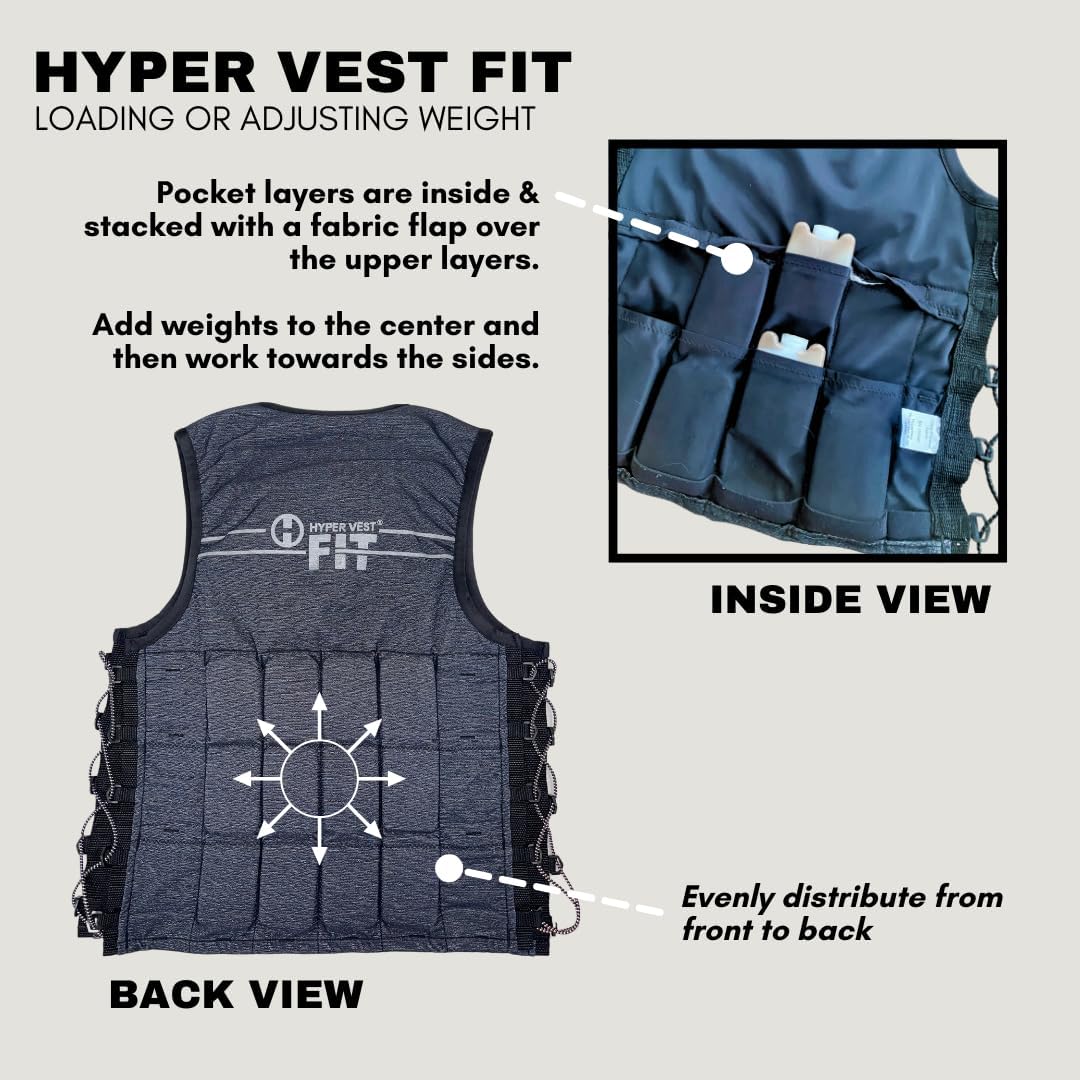
Per Hyperwear’s FIT product specification sheet, the key structural differences from the Elite are:
- A shorter front panel to account for a higher natural waist
- Wider hip-cinch straps positioned lower on the torso
- A modified shoulder opening to reduce pinching at the chest
- The same shot-fill weight system as the Elite, with comparable increment options
The practical consequence, according to aggregated owner feedback cited in the Barbend weighted vest buyer’s guide (Barbend.com), is that FIT owners report significantly less vest migration during movements like burpees, step aerobics, and Zumba choreography. The vest stays where you set it — and in a 60-minute class, that’s not a small thing.
FIT vs. Elite at a glance:
| Feature | HyperVest Elite | HyperVest FIT |
|---|---|---|
| Sizing system | Men’s + Women’s (unisex-influenced) | Women’s-specific architecture |
| Max adjustable weight | ~20 lb (men’s) / ~16 lb (women’s) | ~16 lb |
| Increment size | ~1 lb packets | ~1 lb packets |
| Typical price range (May 2026) | $150–$200 | $140–$185 |
| Best use case | General/instructor across body types | Women prioritizing fit precision |
The FIT’s ceiling weight is slightly lower than the Elite’s men’s configuration, which matters if you’re a female practitioner who has been training with added load for years and is approaching the upper range. At 16 lb, most group-fitness applications are well-covered. Verywell Fit’s overview of progressive overload principles (Verywellfit.com) notes that for cardiovascular-dominant training, vest loads between approximately 5% and 15% of bodyweight produce measurable aerobic intensity gains without disproportionate joint stress — a range that 16 lb covers for the majority of practitioners.
The honest tradeoff: The FIT costs roughly the same as the Elite, which means you’re paying for architectural precision rather than premium materials you don’t already get at that price point. If you are a woman who has worn a unisex vest and experienced shoulder chafing, chest pressure, or vest bounce, the FIT is almost certainly worth the same-tier spend. If the Elite already fits you well, there’s no compelling reason to switch.
Hyperwear
$114.99
In stock on Amazon
Check price on AmazonZELUS Adjustable: The Cost-Conscious Contender
The ZELUS Adjustable Weighted Vest occupies a different tier entirely — typically $40–$70 as of May 2026, depending on max-weight configuration — and it’s worth being honest about what that price difference buys and costs you.
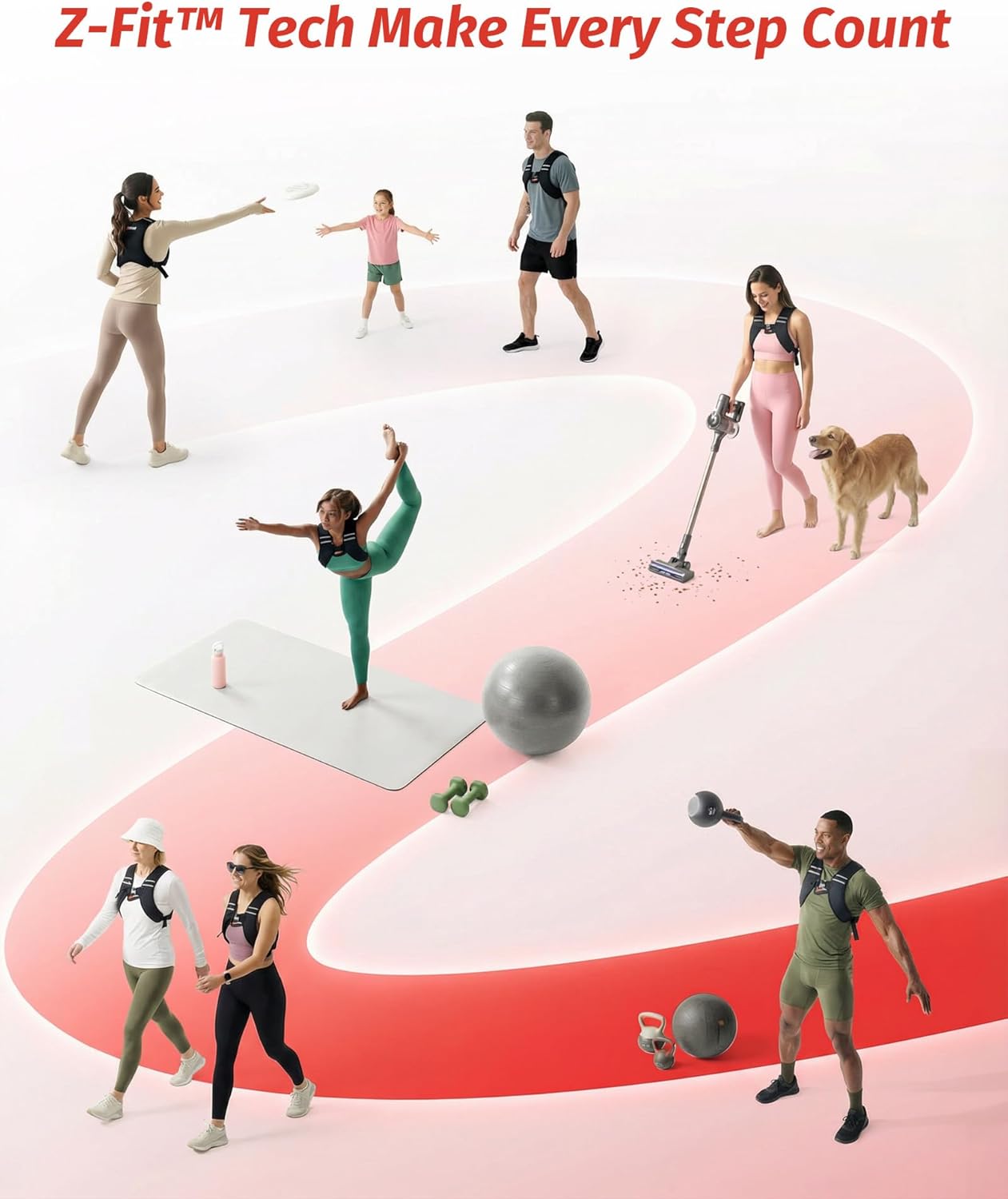
Per the ZELUS product specification summary, the vest uses removable iron sand bags (small fabric packets filled with iron powder or sand) rather than steel shot fill. The outer shell is neoprene or a similar synthetic rubber material, and the vest uses hook-and-loop (Velcro-style) closure at the sides rather than the elastic-cinch system on the Hyperwear products.
What owners consistently report breaks into a clear pattern:
- Wins: Accessible entry price, reasonable adjustment range (typically 6 lb to 20 lb depending on configuration), available in multiple color options, and a vest-forward profile that works for walking and moderate-intensity training.
- Friction points: The neoprene shell runs warm — owners frequently note increased perspiration compared to the stretch-nylon Hyperwear shells, which matters across a 60-minute class. The weight bags, while removable, shift more noticeably than shot-fill during lateral or high-rep movement. The increment packets are typically sold in 2.5 lb units rather than 1 lb, which limits micro-loading precision.
ACE Fitness guidelines on functional resistance training (ACEfitness.org) emphasize that vest stability during multiplanar movement — meaning movement in multiple directions including forward/back, side-to-side, and rotational — is a genuine safety and efficacy variable, not just a comfort preference. A vest that shifts disrupts center-of-mass tracking and can accumulate compensatory stress over a long session.
For a first-time buyer who wants to experiment with added load during walking or low-complexity circuit work, ZELUS is a legitimate on-ramp. For a certified instructor running daily multi-session classes, the neoprene heat retention and 2.5 lb increment jumps are real functional constraints.
The honest tradeoff: The Garage Gym Reviews weighted vest roundup (GarageGymReviews.com) characterizes the budget neoprene adjustable vest category as performing well relative to price but showing durability gaps under daily professional use — with owners reporting worn Velcro and packet seam stress inside 12 months of heavy use. At $50, a replacement cycle is more financially tolerable than it would be at $180. That math only works if you’re not factoring instructor time lost to equipment failure mid-session.
ZELUS
$33.98
In stock on Amazon
Check price on AmazonThe Decision Rule: If X, Then Y
Here’s where the tradeoffs crystallize into a buying framework.
If you are a female group-fitness instructor or Zumba educator running 10+ sessions per week and vest stability during dynamic movement is your primary constraint: The HyperVest FIT is the clearest answer. Its women’s-specific architecture addresses the failure modes that unisex vests create, the shot-fill construction minimizes bounce, and the 1 lb increment packets support the progressive overload precision that separates intentional programming from just wearing a vest.
If you are a mixed-use instructor, small-studio operator purchasing multiple units, or a practitioner whose body fits well in standard sizing: The HyperVest Elite is the reference-class vest at this tier. Its durability record across multi-year owner reports is strong, the increment system is precise, and it performs well across a wider range of movement types. At $150–$200 it’s an investment, but the per-session cost math over a three-year commercial lifespan is favorable relative to replacing a $60 vest twice.
If you are building a first home-gym setup, experimenting with weighted cardio for the first time, or operating on a strict budget ceiling below $80: ZELUS is a workable starting point for lower-intensity use — walks, steady-state cardio, beginner circuits. Enter with clear expectations: the vest performs at its price point, and the durability ceiling is real. Treat it as a proving-ground purchase rather than a long-term asset.
If you are sourcing multiple units for a boutique studio or instructor-training program: Neither ZELUS at volume nor a single Hyperwear unit fully answers the question. This is the scenario where bulk-buy pricing through specialty fitness equipment distributors or a direct commercial inquiry with Hyperwear is worth pursuing — a topic covered separately in the studio-sourcing section of this site.
One final point worth naming directly: the gap between ZELUS and HyperVest is not primarily about features — it’s about the integrity of load delivery under sustained professional use. For recreational training, that gap is a preference. For professional instruction, it’s a functional constraint. Know which category you’re in before you decide.